September 29, 2026 · Nextler Team
The Used Natural Gas Generator Premium Is Bigger Than the New One
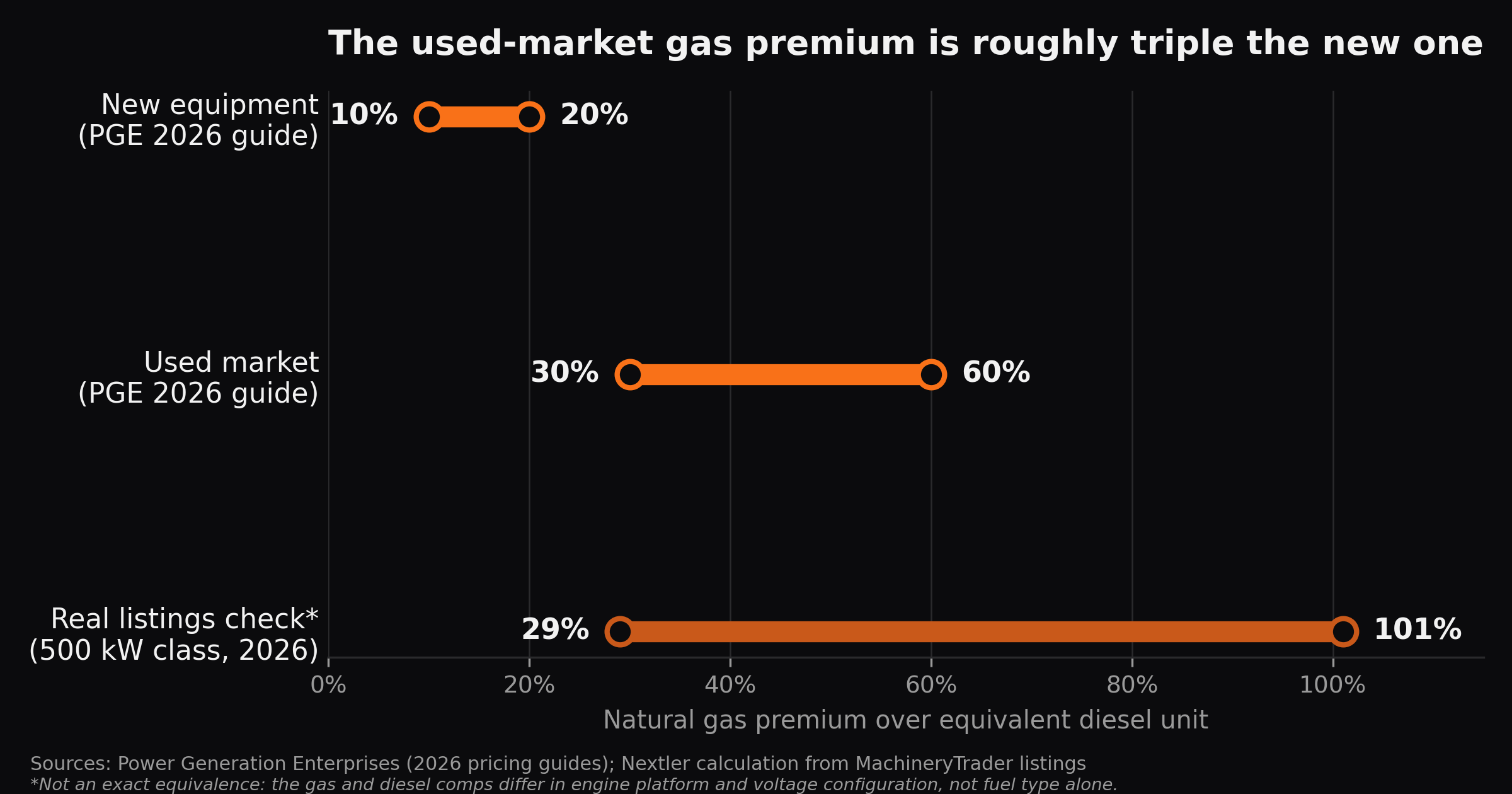
A buyer shopping the used market for a 500 kW Caterpillar generator right now will find a G3412C natural gas unit with 78.8 hours on it listed at $169,900, next to a 2023 C15 diesel unit of the same rating listed at $132,000, according to MachineryTrader's Caterpillar 500 kW listings. That is a nearly unused gas set asking about 29% more than a three-year-old diesel one. Widen the comparison to the older diesel units on the same page, built between 1997 and 2015 and priced from $42,500 to $75,000, and the same gas unit is asking more than double.
Before reading too much into that, one caveat matters. These are not identical machines. The gas unit runs a different engine platform and is configured for 120/208 V, according to its Surplus Record listing, a low-voltage setup many industrial sites would need to confirm or change. And the older diesel units differ from it in age, not just fuel. So the spread is not a clean "gas vs. diesel" number. It is a real-world snapshot of what a tight market does to a scarce, low-hour gas unit.
Where the 30-60% number comes from, and why it needs a second look
The most specific figure we found for this premium comes from Power Generation Enterprises, a dealer that says it moves more than 200 industrial sets a year and tracks transaction pricing across the kW range. Its guide states that "on the 2026 used market, yes, natural gas generator sets carry a 30-60% premium over equivalent-kW diesel units," attributing it to thin supply and rising demand, according to Power Generation Enterprises' 2026 pricing guide.
That range is worth using, with a caveat: it is one dealer's view, built on its own inventory turnover plus auction and dealer-to-dealer comps, not an independent market study. Our own check against the MachineryTrader listings lands near the low end of that range (about 29%) against the closest diesel comp. Comparisons against much older diesel units go well past 60%, but that gap reflects age as much as fuel, so we would not treat it as part of the fuel premium itself.
The used premium looks roughly triple the new one
The same publisher's guide to natural gas equipment puts the capital cost gap at 10-20%, noting that "capital cost for equivalent power output is generally 10-20% higher than diesel alternatives due to the more complex air-fuel management systems required for emissions compliance," according to Power Generation Enterprises' natural gas buyer's guide.
Put the two figures side by side and the used-market premium is roughly three times the equipment-cost premium. Both numbers come from the same dealer, so this is one source's picture, not a market-wide measurement. But the logic behind the difference holds up. New gas equipment costs more than new diesel for an engineering reason. Used gas equipment costs a lot more than used diesel for a market reason: buyers are competing over a fixed, aging pool of secondhand units instead of ordering whatever a factory can build.
It is not one manufacturer, it is the whole reciprocating engine market
We have already covered why a new gas turbine is hard to get this decade, with GE Vernova's CEO saying slots for 2032 are already being discussed with customers, in our earlier piece on gas turbine lead times. The same scarcity now shows up in reciprocating gas and diesel engines, the platform behind most industrial generator sets, and it shows up in the manufacturers' own 2026 earnings calls.
Cummins CFO Mark Smith told investors on the company's Q2 2026 call that for a new large genset, "if you want a new one, it's going to be the second half of 2028," while CEO Jennifer Rumsey described "several gigawatts of future backup power genset demand" from a single hyperscaler partnership, according to coverage of the earnings call. Caterpillar reported a $72 billion order backlog on its Q2 2026 call, with power and energy customers placing orders through 2030, and is restarting a 10 MW medium-speed gas engine platform it stopped building in 2022, adding 1.5 GW of capacity, according to Utility Dive. INNIO, owner of the Jenbacher and Waukesha brands, announced a 450 MW order for Jenbacher J624 engines with delivery expected by 2028, according to INNIO's announcement, following a 1.1 GW order for more than 200 J624 engines announced in July, according to INNIO's press release. Three manufacturers, the same message: new capacity is booked years out.
The wildcard: Chinese manufacturers are starting to fill the gap
The one force that could loosen this over time comes from outside the usual supplier list. Weichai Power says it sold more than 1,400 data center generator units in the first half of 2026, already more than its full-year 2025 total, and that its units have "entered the core supply chains of the world's leading data centers and major cloud service providers," according to a Weichai press release. These are the company's own claims, and it is still mostly a diesel story, with gas engines described as a "mid-term growth driver." None of the pricing data in this piece includes Chinese-brand equipment. It is worth watching: if that volume keeps growing, it is the most likely source of real relief on new-equipment lead times, and eventually on used-market pricing.
What to check before comparing prices
A listed price only means something against a genuinely comparable unit. Before judging whether a used gas generator is fairly priced, confirm:
- Exact engine and generator model, kW and kVA rating
- Voltage, frequency and standby vs. prime rating
- Operating hours, starts and hours since overhaul
- Maintenance records and load-bank test results
- Emissions configuration and fuel system
- Location, inspection access and what it takes to ship and install
Nextler Team Analysis
The number worth remembering is not 30% or 60%. It is that the premium is not fixed. It moves with how badly a specific buyer needs gas over diesel, how few comparable gas units are on the market at that moment, and how close the unit is to new. When we vet an opportunity, we do not check a listed price against a single published range and call it done. We check it against real comparable listings at that kW class, hour count and configuration, the way we did with the 500 kW example above. A gas unit priced inside that range, given its hours and documentation, is a fair reflection of a tight market. One priced well outside it, in either direction, deserves a second look before anyone commits capital. And the scarcity behind it is not a one-manufacturer story. Cummins, Caterpillar and INNIO are all pointing to multi-year backlogs at the same time, the kind of industry-wide signal that tends to hold prices up rather than correct them quickly.
If you are evaluating a used natural gas or diesel generator and want a second opinion on whether the price reflects the current market, our team can help.